
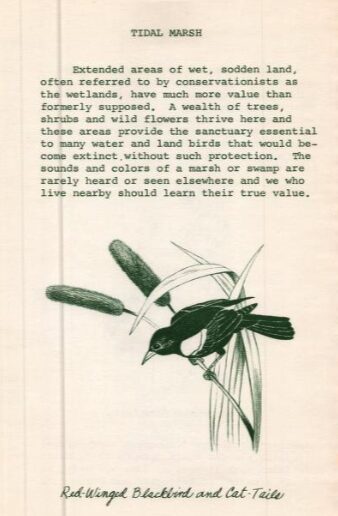
Joyous, I heard, while slowly borne along,
From wakening birds, the early burst of song,
Upspringing like a morning hymn, to rise
And mingle with the worship of the skies.
-J.A. Ayres, The Legends of Montauk, 1849
This time of year, the dawn chorus of birdsong combines mating, territorial, alarm, and location vocalizations from resident, summering, and migrating species, rousing even the deepest sleepers with a cacophonous morning concert.
Montauk’s extensive parklands and preserves provide food, water, shelter, and space for somewhere between 51 and 75 nesting and breeding species, according to data from the last New York State Breeding Bird Atlas.
Ornithologists and birders use mnemonics to describe bird vocalizations. The Red-winged Blackbird’s Conk-la-REE! is a classic sound of wetlands across the continent and a harbinger of spring here on the East End, while the Eastern Towhee’s Drink-your-tea! reverberates through the shrubs on the library grounds and in nearby forests. The song of the Carolina Wren, another backyard aficionado of herbal infusions, resembles a fast and loud repeated Teakettle! Teakettle! Teakettle!
Red-winged Blackbirds frequent the library’s feeder station, located off the Children’s Deck
In J. A. Ayres’ 1849 poetic exploration of the area, The Legends of Montauk, the author frequently references the peninsula’s bird life, providing a lens into Montauk’s fauna before 20th-century development. “From its loneliness, the great extent of which is uninhabited, its insular position, and its numerous ponds, Montauk is the resort of great numbers of water birds at different seasons when their migrations bring them to our shores,” he wrote.
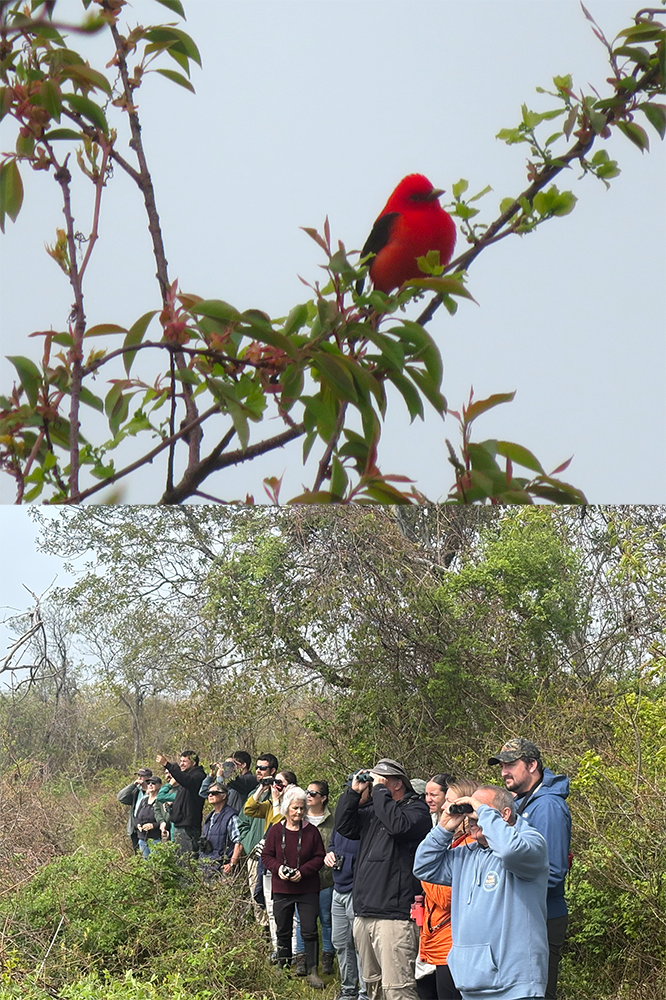
Today, with spring migration well underway, budding birdwatchers and advanced naturalists alike are treated to bursts of color and birdsong in backyards, forests, and among the reeds. The Northern Yellow Warbler’s repeated Sweet sweet sweet I’m so sweet! is “a common sound of spring and early summer mornings and may be repeated as often as 10 times per minute,” says Cornell Lab of Ornithology’s All About Birds website – a great resource for learning bird identification by sight and sound.
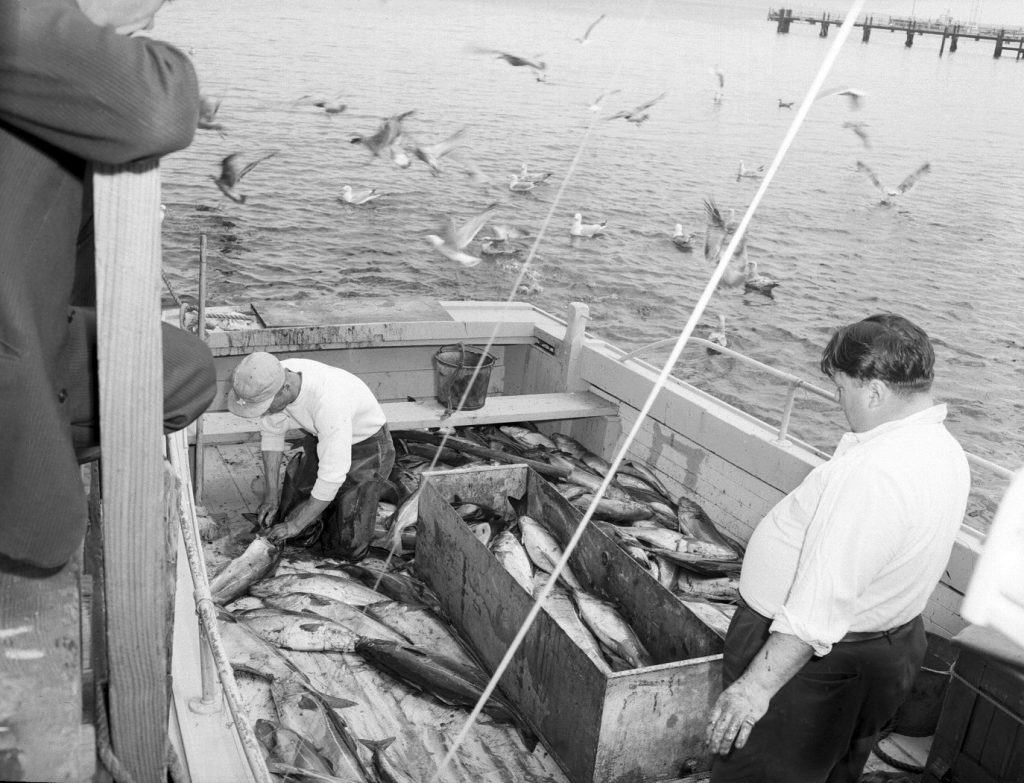
Meanwhile, the docks, shorelines, and harbors bustle with boisterous gulls and terns. The gulls’ deep, throaty, and trumpeting vocalizations contrast with the terns’ fast, harsh, and shrill calls. Their mention in Ayres’s work is sometimes cryptic and demystified by the author in the historical appendix. The line in the passage below, “But to the upper air returned no more,” is annotated as referring to diving terns, who, after being submerged for several seconds, often fall prey to large fish, never making their way past the water’s surface.
For with closed wing he fell as heretofore,
But to the upper air returned no more;
Lost in the ravening maw of fish that spring
Swift through the waters as the bird on wing.
– Ayres
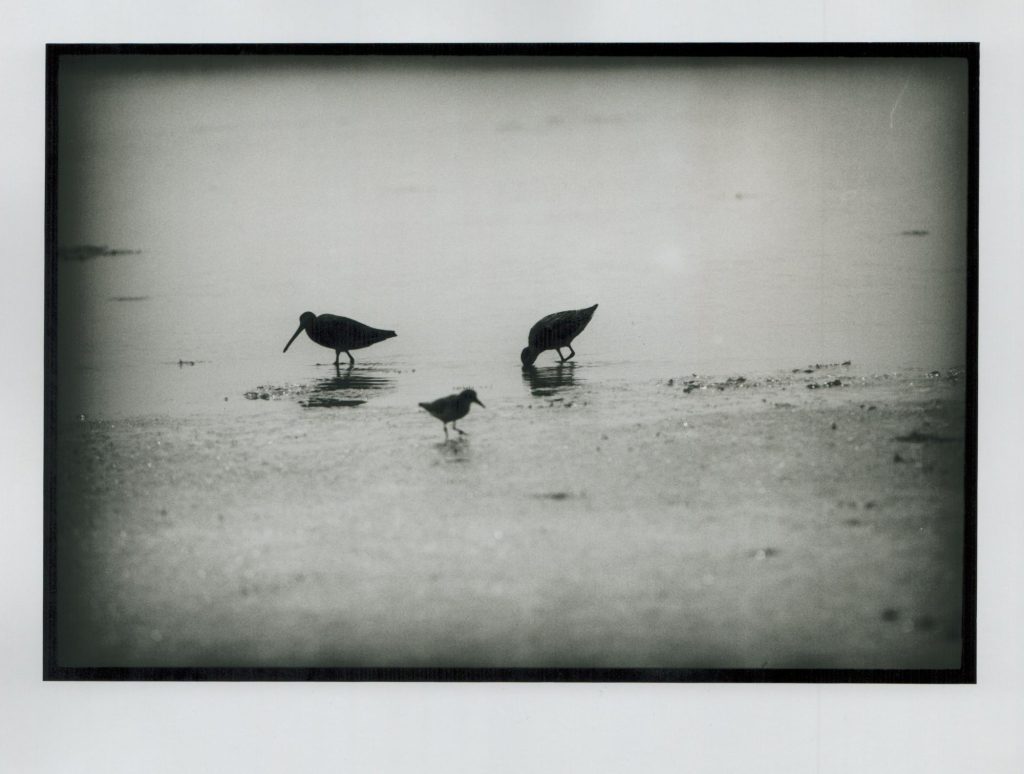
But see the countless tiny birds that roam
Backward and forward through the sparkling foam;
Their nimble feet the gliding wave pursue,
Their eyes so quick, the struggling insect view;
Gathering their food from ocean’s kindly hand,
Brought by the wave and left upon the sand.
– Ayres
The birdlife of Montauk has long inspired local artists, writers, and photographers. In her free time, Kathyn Abbe (1919-2014), a famous fashion and editorial photographer, aspired to photograph birds. She would pay her children a quarter apiece if they spotted swans from their home on the cliffs of Hither Hills. “They followed a certain pattern. Every afternoon, about 4:30, they would fly directly over the water. I could look out, and they were just eye level,” recalled Kathryn in an oral history interview from 2003.
“And of course they fly in a V-shaped formation, a ragged V, and they go down toward Fort Pond and then they’d swing over and land on the pond. That was their home. And so [the kids would] be out there. They say ‘Swans. Swans.’” The swans flew too fast for Kathryn, who never captured them in flight and eventually gave up. She did photograph more cooperative subjects like shorebirds foraging along the shoreline of Oyster Pond (pictured above) and herons at Little Reed Pond.
You don’t have to leave your backyard to enjoy the collective dawn chorus of Montauk’s birdlife, but if you do, stop by the library and pick up a copy of Birdwatching in New York City and on Long Island to learn about popular local birding sites or join the Montauk Library Bird Club on a group walk with local experts. Montauk Library cardholders can also borrow a birding backpack from our Library of Things, complete with binoculars, field guides, and an illustrated checklist of species.
Happy birding!
Reply or Comment