
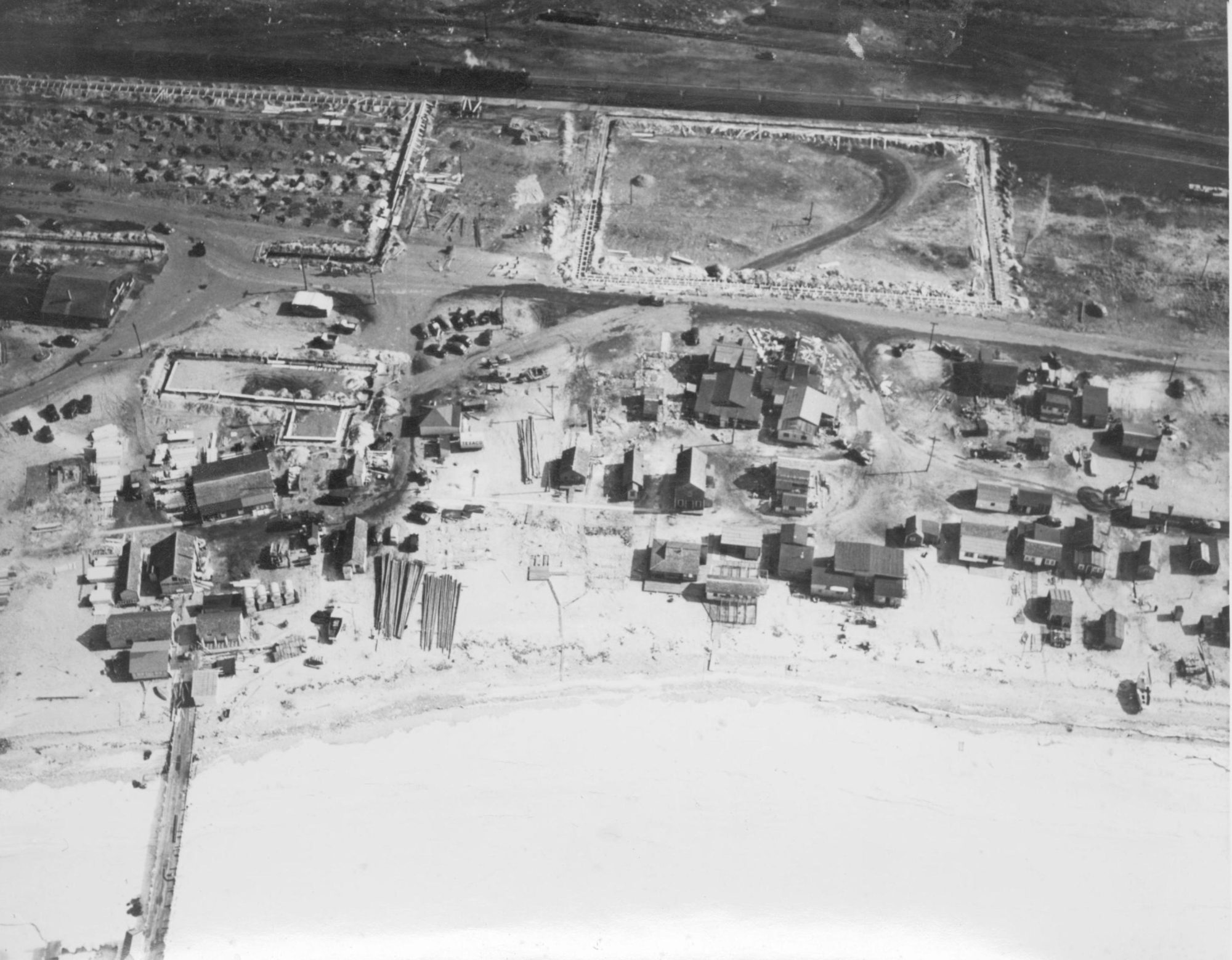
Two years into World War II, “tin fish,” a non-threatening nickname for torpedoes, became the prevailing fish running in Montauk’s Fort Pond Bay. What was once a bustling fishing village, still in recovery from the 1938 hurricane, was now occupied by a US Naval Torpedo Testing Range.
The US Navy started construction of the torpedo testing range in 1942 to increase testing and delivery of commercially manufactured torpedoes, while stations established at Camp Hero and the lighthouse were part of the Eastern Coastal Defense Shield.
The development of the naval base on Fort Pond Bay put a halt to the area’s commercial and sportfishing industry and displaced families and businesses of the old fishing village in the name of the war effort.
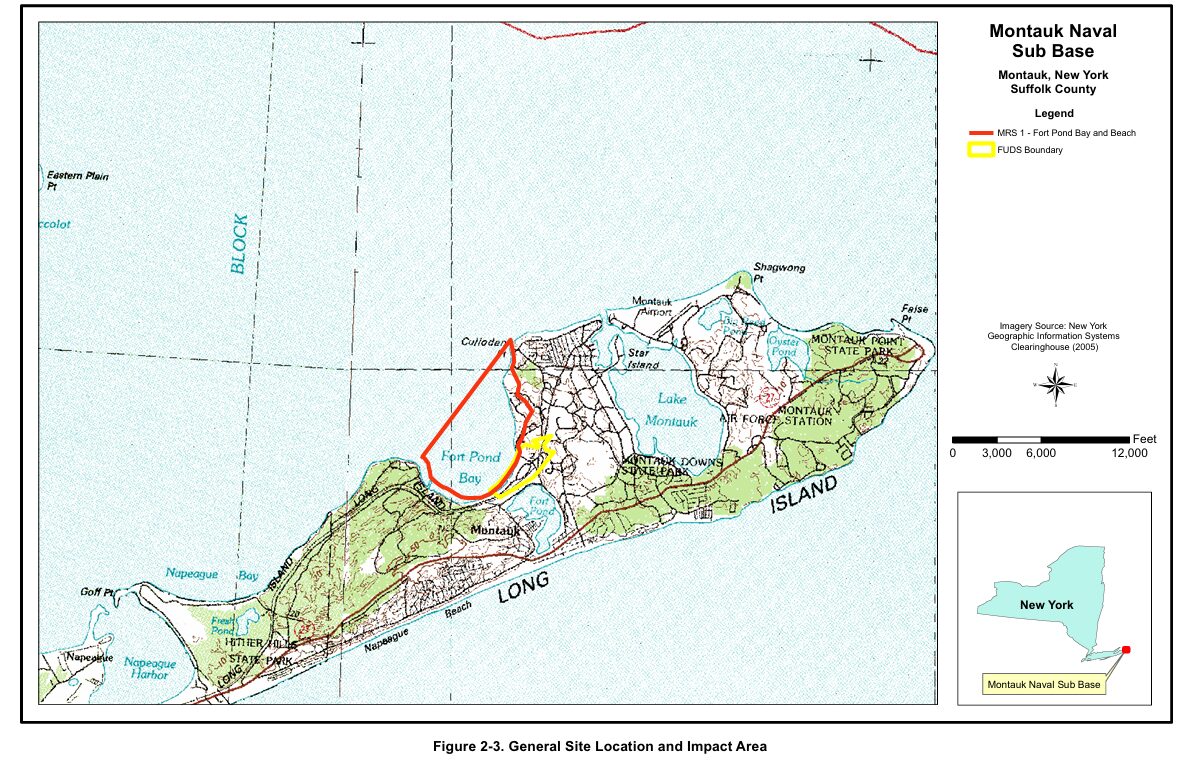
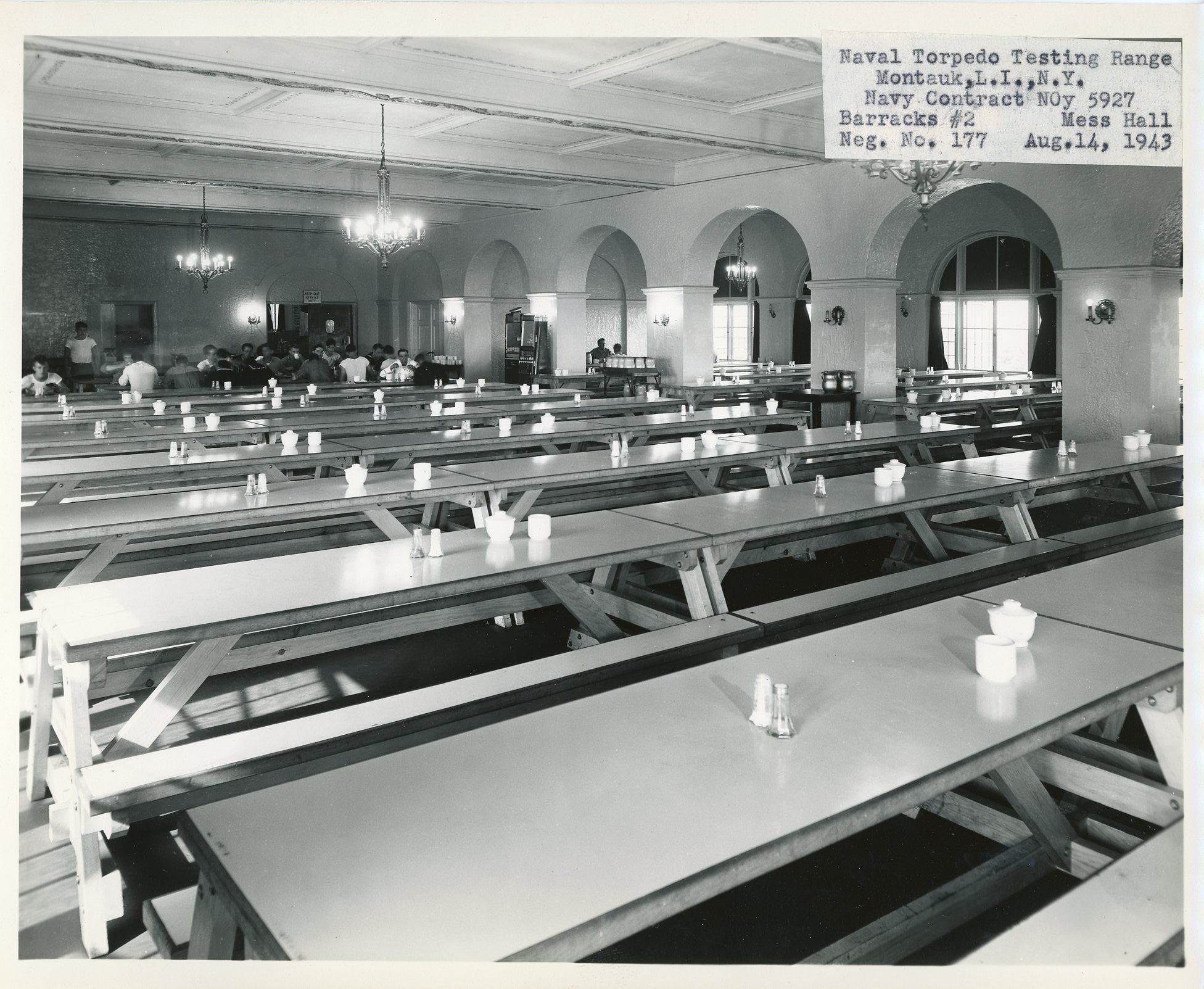
The Montauk Naval Torpedo Testing Range, also known as the Montauk Naval Sub Base, officially began operations in March 1943 and spanned nearly 45 acres. It was comprised of new construction and repurposed existing buildings. It spread from the end of Navy Road all the way to the Montauk Manor, which they commandeered for headquarters and barracks. The Long Island Railroad station served as the main gatehouse, while a portion of the administration tower building in downtown Montauk was repurposed for officers’ quarters.
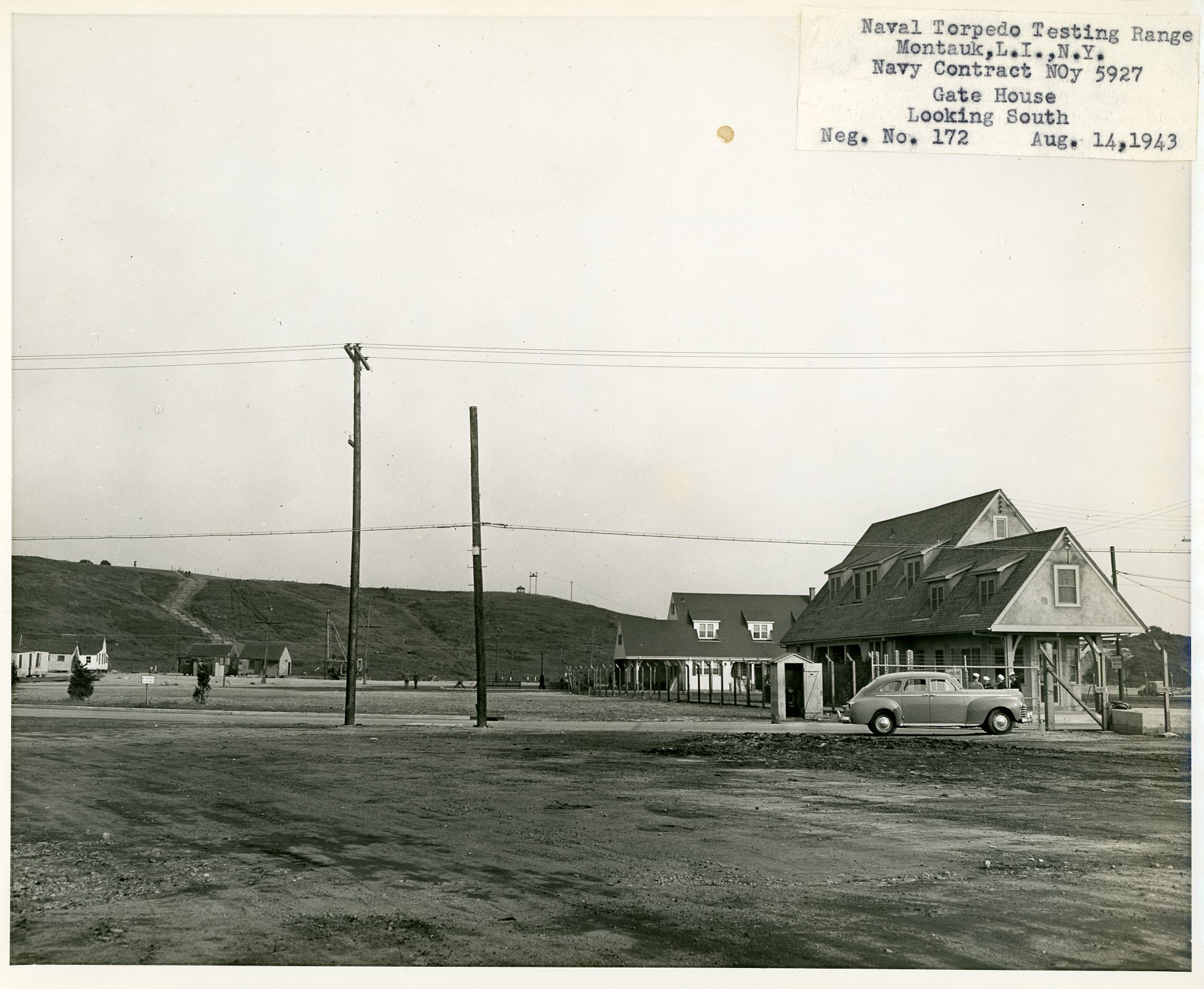
Residents of the old fishing village on Fort Pond Bay who occupied land leased from the Long Island Railroad were ordered to relocate and limit fishing operations on the bay.
“The railroad had sold the property to the Navy as a torpedo testing range, and the people were given their 30-day notice to either remove their houses or abandon them,” recalled Eugene Beckwith Jr., a former fishing village resident and US Navy serviceman. “If they abandoned them, they would get $300 to get started again someplace else and the houses would be bulldozed.”
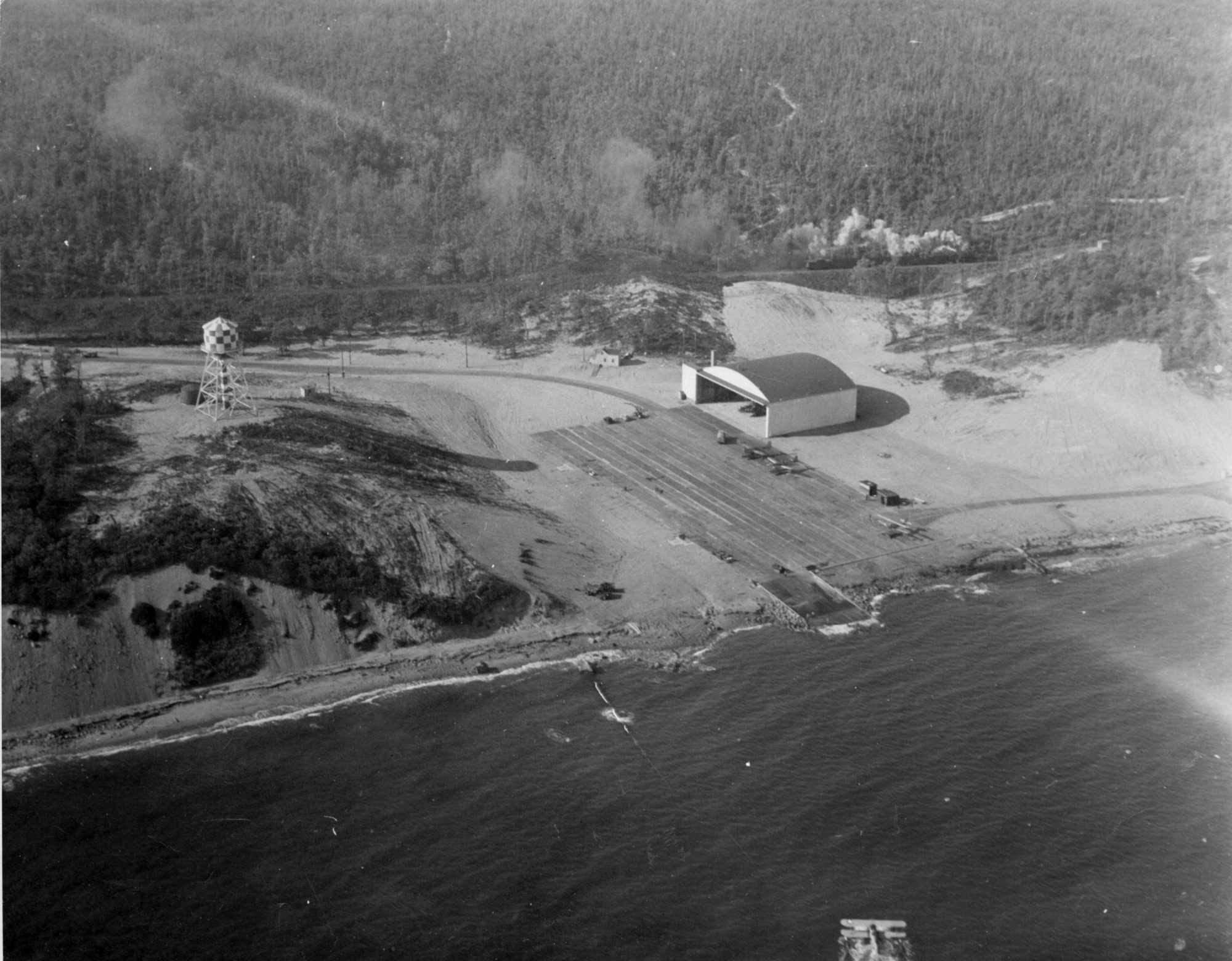
New construction included a submarine port, piers, torpedo manufacturing facilities, torpedo testing barges, a seaplane hangar and ramp, as well as general facilities for both military and non-military personnel.
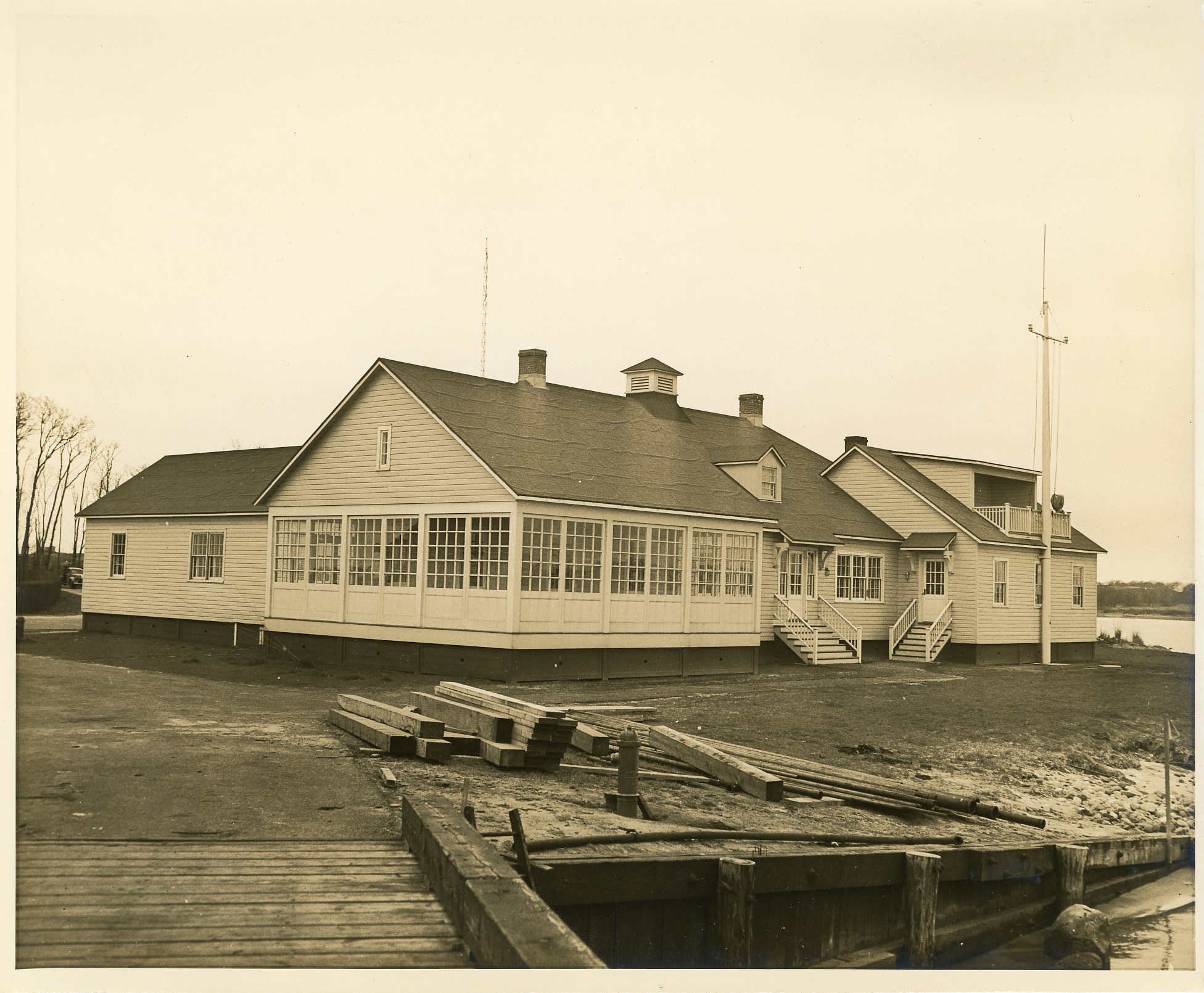
The Navy tested two types of torpedoes in Montauk, including air-launched and surface-launched (or barge-launched) steam-operated torpedoes. The torpedoes were loaded with inert warheads and tested within Fort Pond Bay and areas of Block Island Sound.
“If they don’t stay on the line or travel at the right speed or remain at the right depth or go the correct distance, they are overhauled and tested again,” reported the New York Times on February 22, 1944.
Pilots in seaplanes would follow the torpedoes’ path, retrieve them once their fuel was spent, and return them to the base. If they passed inspection, the torpedoes would be shipped out and used to “send enemy ships and submarines to the bottom of the sea.”
Film footage from January of 1944, available on YouTube, shows activities of the naval torpedo testing range, including its manufacturing facilities, docks, hangars, and air-launched torpedoes dropped from seaplanes into Fort Pond Bay.
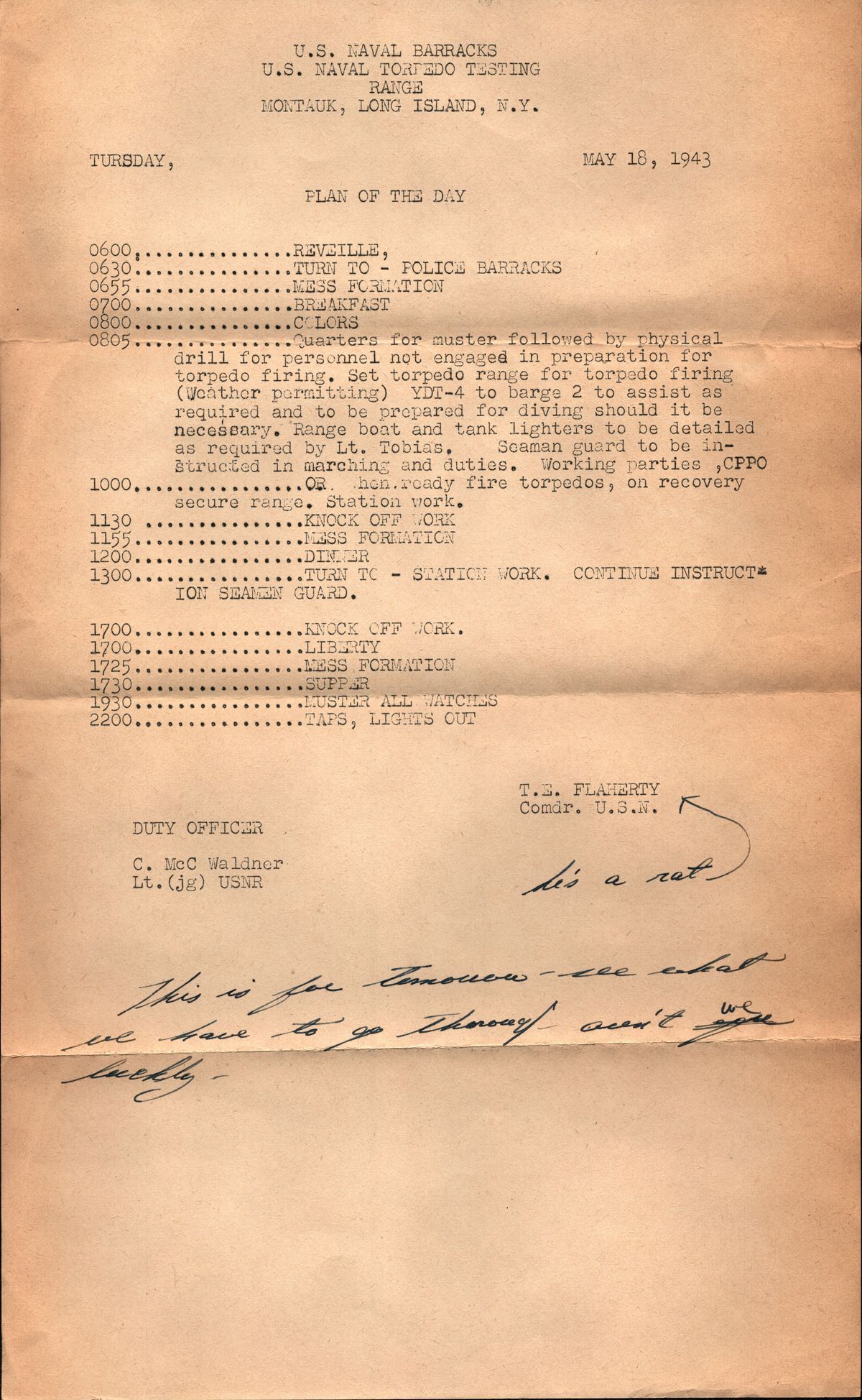
Oral history interviews in the Montauk Library Archives reveal residents’ memories of the base. “Sometimes they would go awry. And these were not loaded torpedoes; they were practicing for direction,” remembered Bettie Duryea, “and when it would go awry, you could hear this whoop, whoop, whoop all over town. And you could look out and see the torpedoes going all in the wrong direction, never hurting anybody, but that’s what that base was all about.”
“They were losing the torpedoes. When I was on Gardiner’s Island, I found three that were washed up on the beach over there by Tobacco Lot. I notified the Coast Guard, and they came over, and about six months later, I got a cheque for $500,” recalled fisherman Craig Tuthill.
The local United Services Organization (USO) Club sponsored recreational activities to help boost morale and build community between servicemen and civilians. The Montauk USO was active for 16 months and served over 40,000 servicemen. The club hosted dances, indoor and outdoor film screenings, clambakes, spaghetti dinners, bingo, songfests, and a religious program, including masses and communion breakfasts. The club also provided fishing gear and equipment, envelopes and letters for servicemen to write to their friends and family.
Montauk’s Naval Torpedo Testing Range. By August of 1944, the Bureau of Ordnance announced plans to close the base and relocate equipment and personnel to the naval torpedo testing station in Newport, Rhode Island.
The base officially closed on February 28, 1945. “Montauk Manor, which has been used as headquarters for personnel, is scheduled to be turned back to the Montauk Beach Company and may again be in operation as a resort hotel during the 1945 summer,” reported the East Hampton Star on October 26, 1944.
In 1946, Montauk’s Naval Torpedo Testing Range was declared excess and was transferred to the War Assets Administration, which sold off or transferred portions to Goble Aircraft Specialties Corporation—developers of the Fishangri-la sportfishing complex — the Long Island Railroad, and real estate developers.
Later, the New York Ocean Science Laboratory occupied several of the former Navy buildings, while Rough Riders Landing and Avallone Apartments repurposed part of the campus for apartments and condominiums. East Hampton Town’s Shellfish Hatchery is also in a former naval building, and remnants of the seaplane ramp are still visible at the Rod’s Valley Park Preserve at the end of Navy Road.
Reply or Comment