
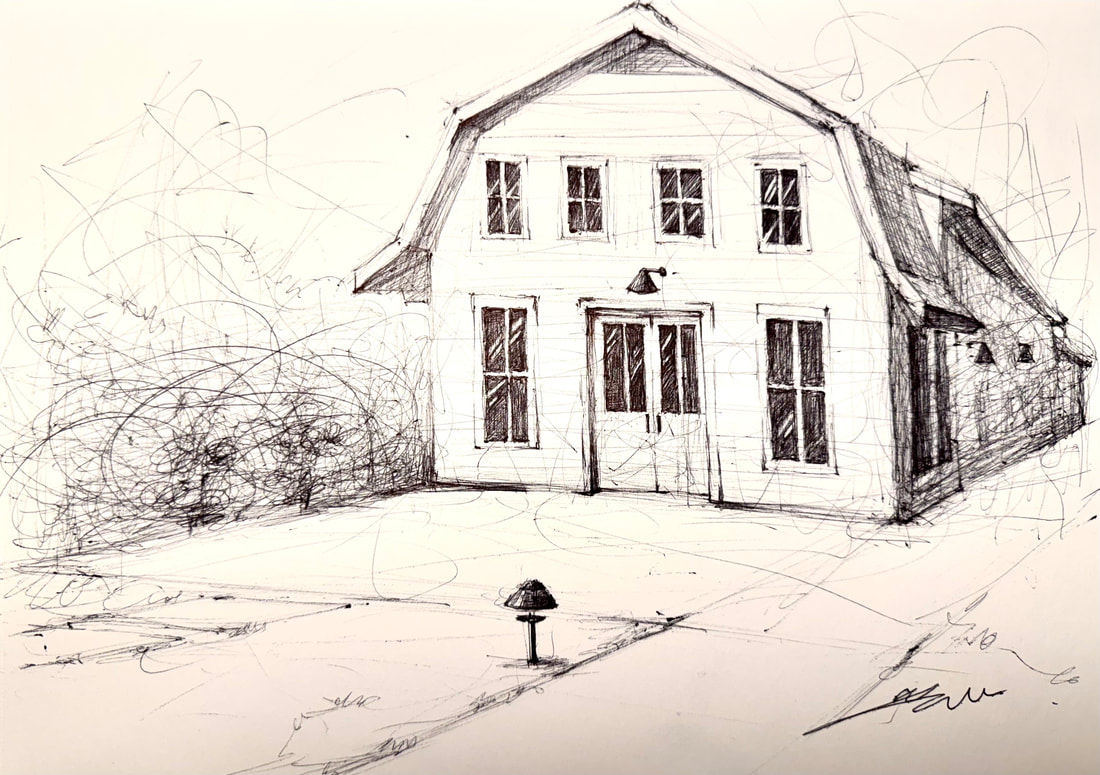
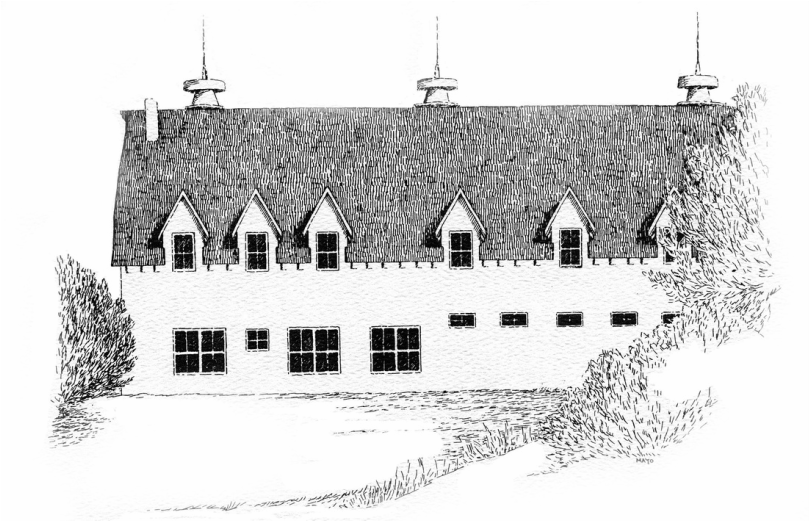
Funny – considering it was she who advocated, in “A Room of One’s Own,” for a peaceful, quiet space to write – that it was Edward Albee’s Who’s Afraid of Virginia Woolf? that made it possible to provide just such a space for writers and visual artists here in Montauk.
In the 1960s, after Albee was introduced to Montauk by Uta Hagen, who starred as Martha in the stage version of Who’s Afraid, he purchased a home of his own on Old Montauk Highway – and then went on to use proceeds from the wildly successful play to pay $20,000 for a derelict former stable.
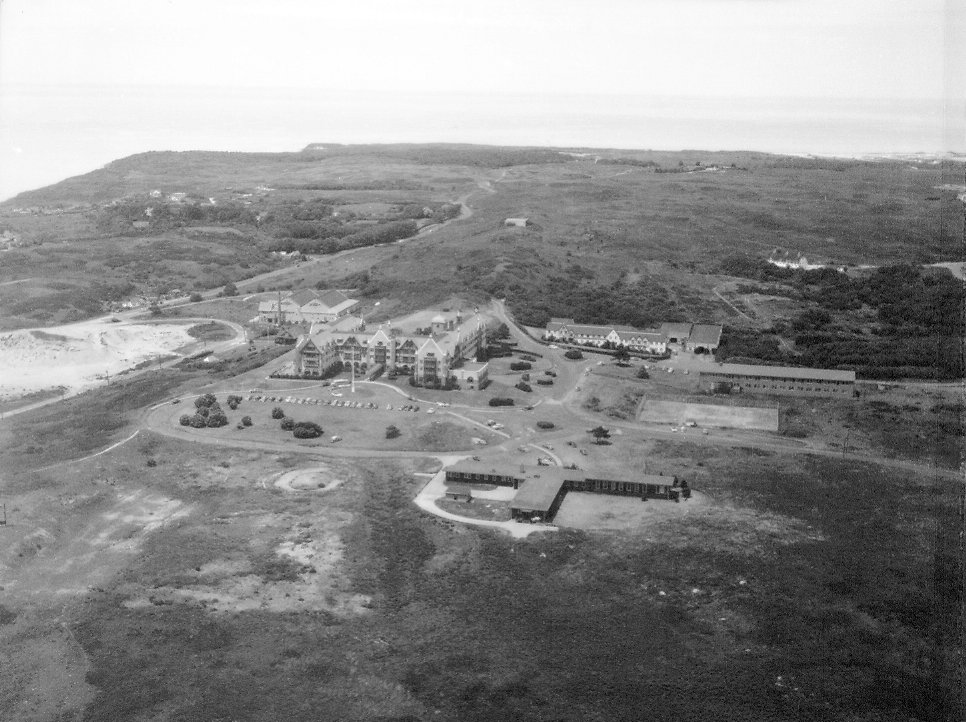
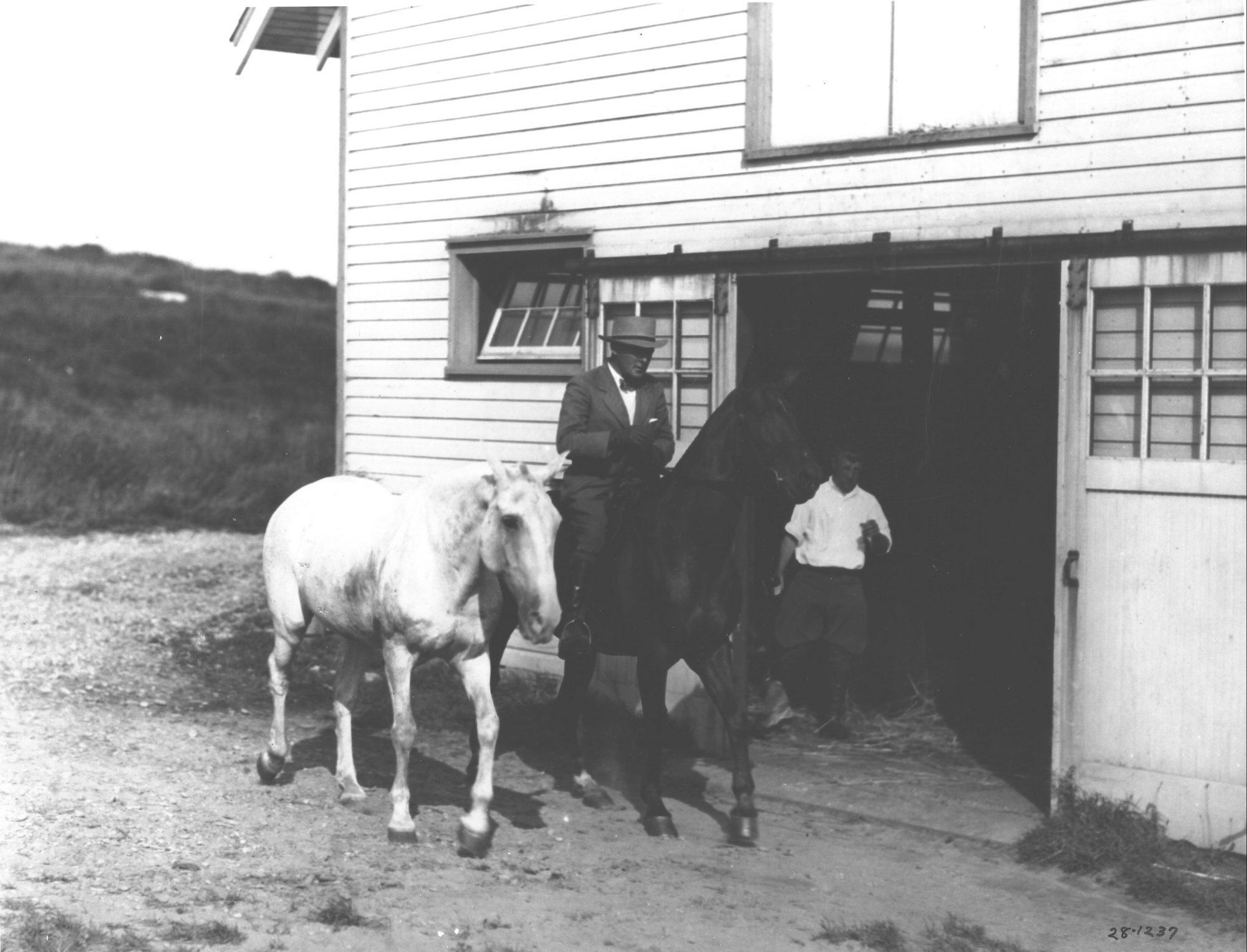
Decades earlier the building had housed polo ponies for Carl Fisher and his guests at the Montauk Manor. Most recently it was being used seasonally as a home base for a teenagers’ dance hall called the Cola Copa.
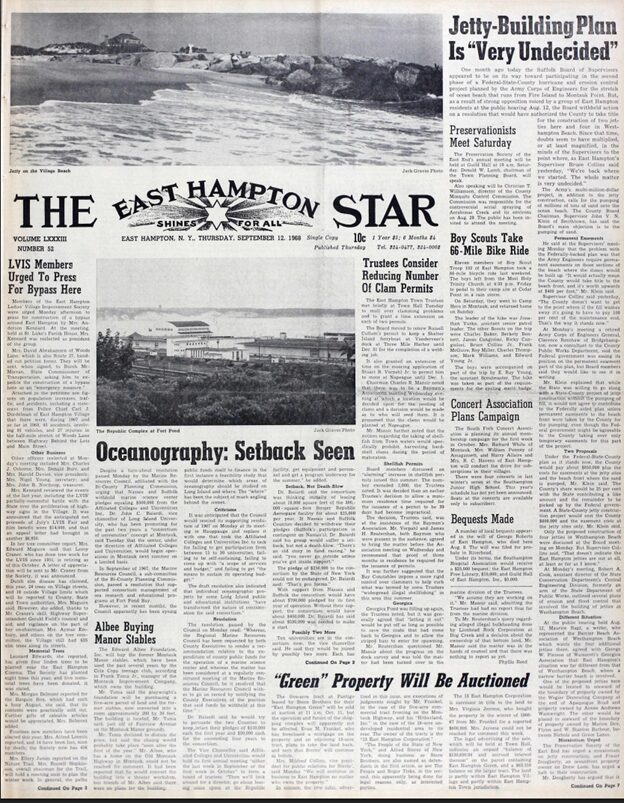
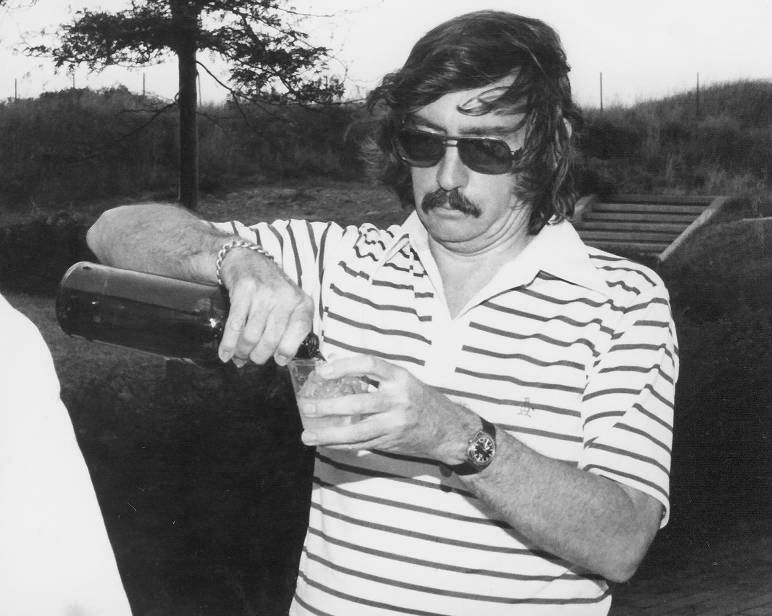
Another $20,000 to fix it up and soon writers and visual artists could apply for selective residencies at the William Flanagan Memorial Creative Persons Center, or the Albee Barn, as it came to be called. With enough space to board and provide workspace for five or six residents, the building for nearly 60 years has provided a temporary place to work in peace without, as one admirer said, having “to go to work at night as a waiter.”
The residencies are relatively minimal and unstructured, not much more than what one artist described as “a gust of wind” in his sails. “When I arrived … all I found was a great, clattering, empty wooden barn –not a soul in sight, and not a whiff of patronizing BS,” said another in an interview in The Dramatist. “The message was clear: we were serious artists, all of us, and we could figure out for ourselves what we needed and didn’t.”
With its mostly young and talented communal boarders, the remote retreat has provided a backdrop for marriages, affairs, divorces, failed suicides, even flights by some residents from the screeches of neighboring owls. Before he died in 2016, Albee used to drop by to deliver the mail or, as he admitted, “to snoop” and encourage the artists.
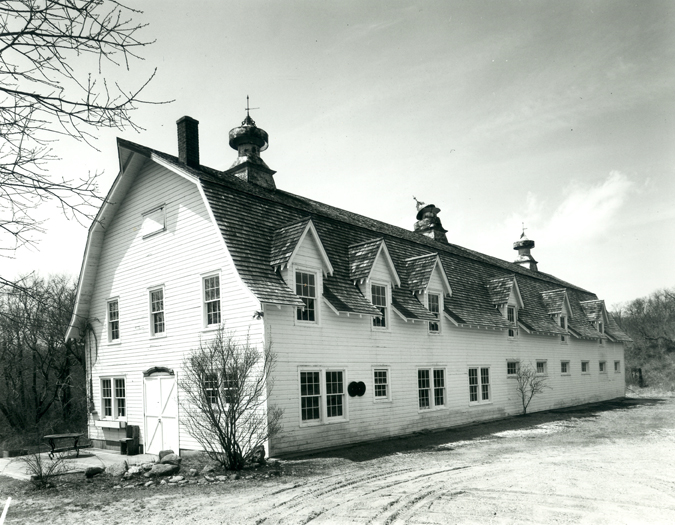
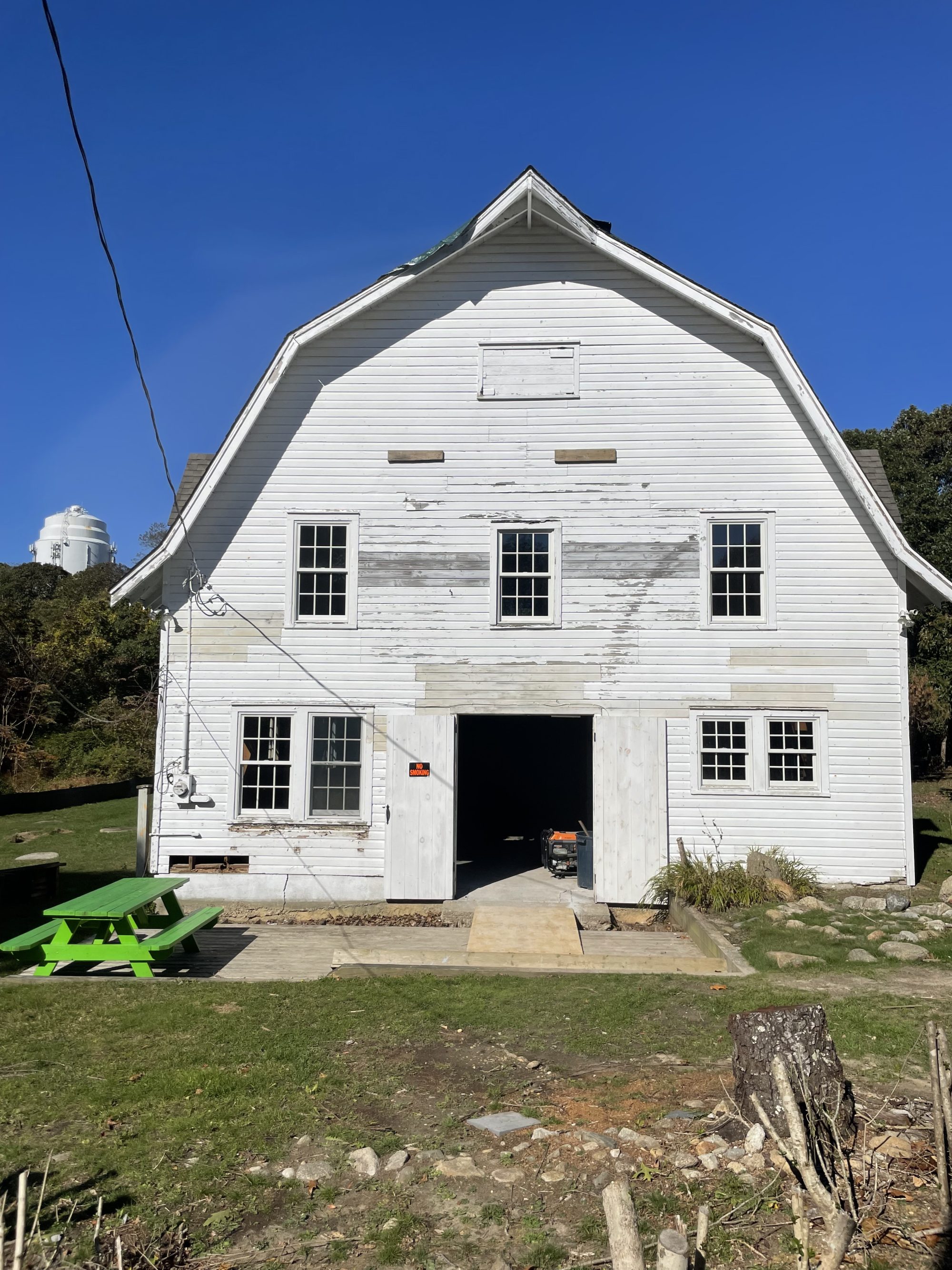
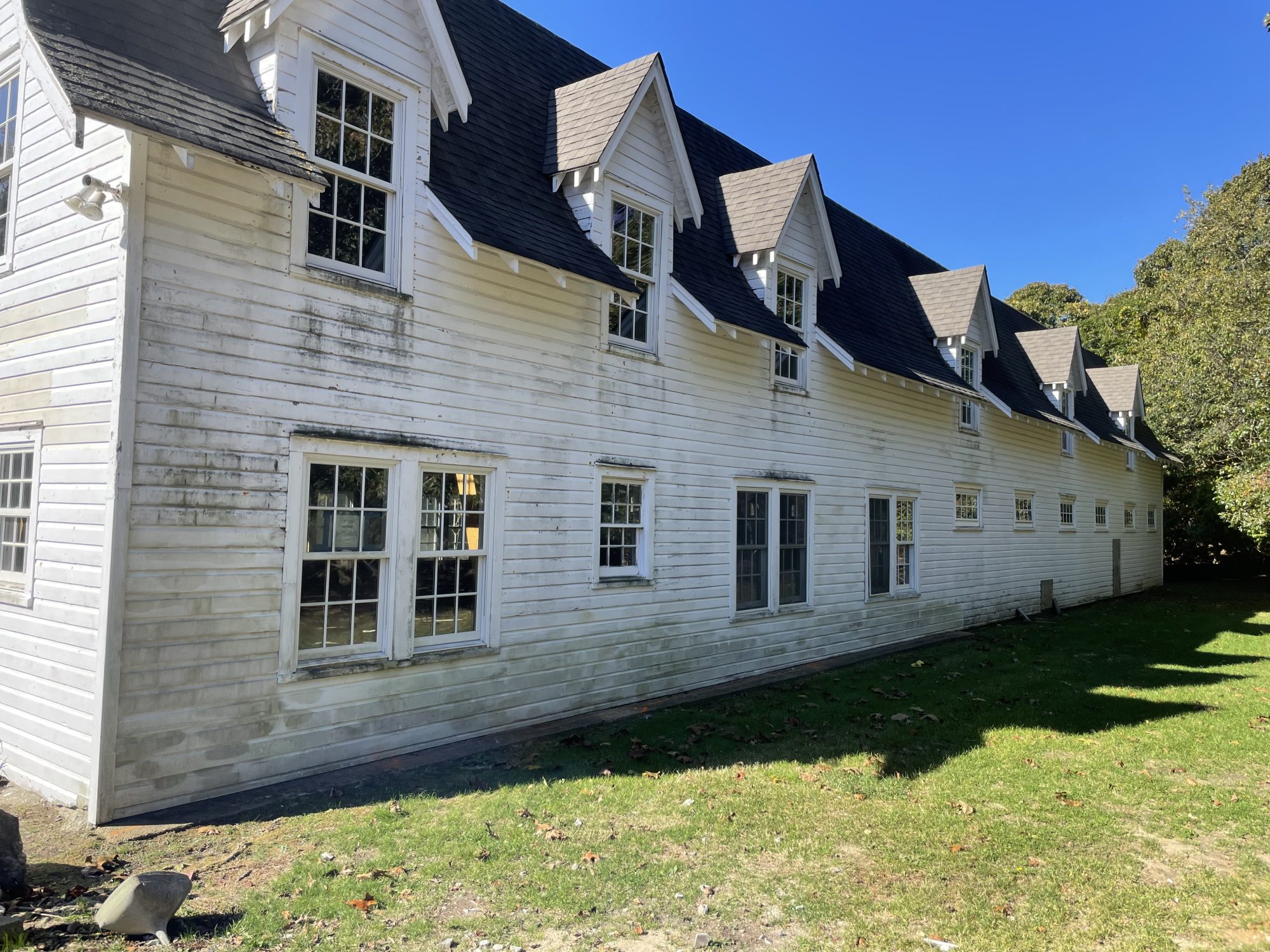
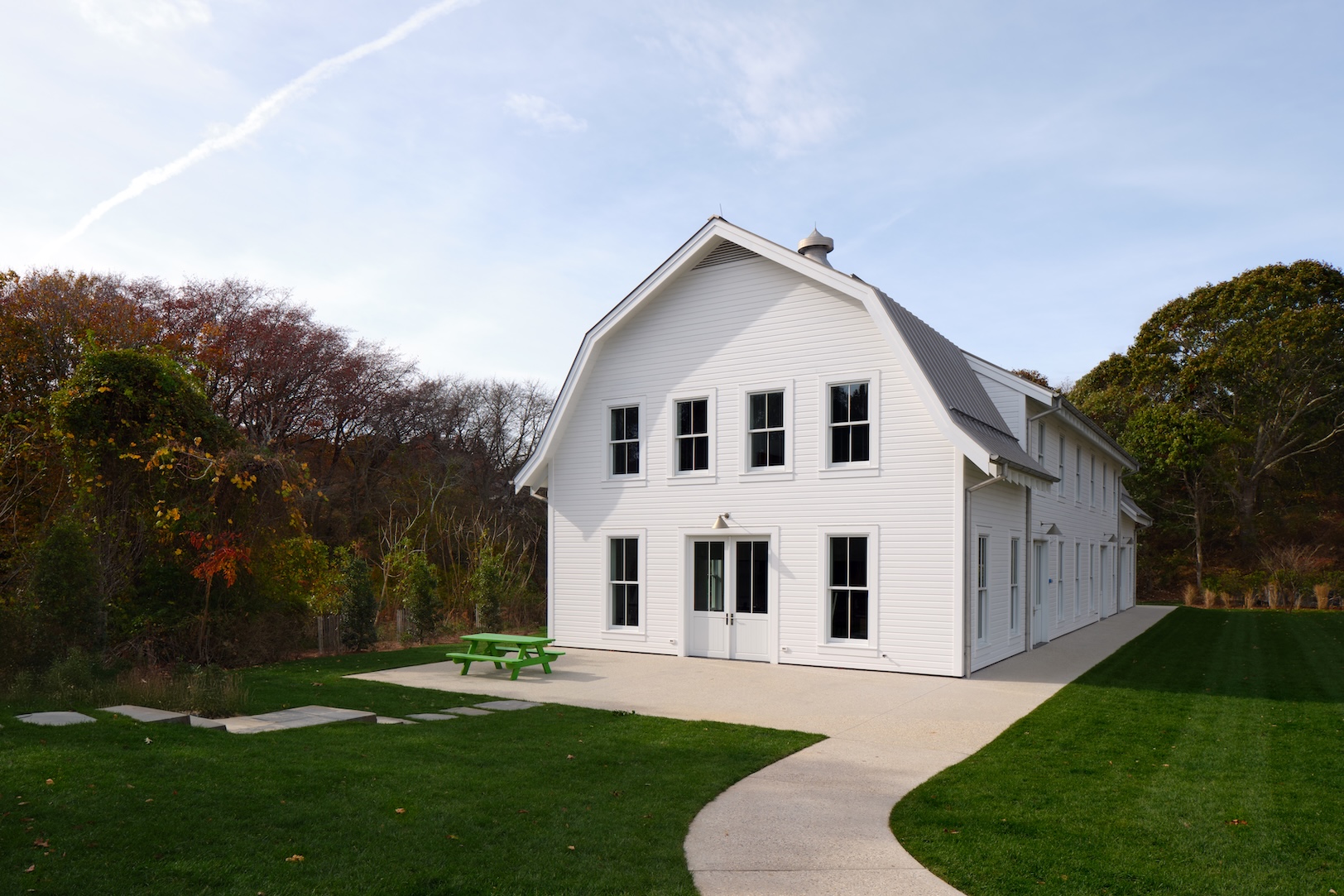
Because the Barn wasn’t weatherized, the roughly one-month stays were confined to a very short season, minimizing how many artists could come stay in one year. Starting in 2022, however, the foundation undertook a massive renovation, basically rebuilding the barn, rewiring it and adding a foundation and septic system while sticking to its original footprint on the property.
“It was very run down, a rat’s nest, a tinder box,” explained Brian King, project manager. The rebuild preserved the barn’s original trusses, although they were now purely ornamental. The project also made the barn ADA-accessible, which might have pleased Albee, who reportedly used a wheelchair toward the end of his life.
Brian King said a huge delivery of books and LPs had been sent to the barn after the work was completed – “to the point where I had to build more bookcases.” The items came from Albee’s Montauk home and his loft in New York City; they also included artwork he’d collected from friends and other beneficiaries.
For the visual artists, however, the foundation maintains “a fresh place to work,” he said. “Every last day of the month,” after one set of residents has left, “we paint the walls white” to minimize distraction for incoming artists. “The fellows that come, it’s a really special thing,” he said. “It’s magnificent. It’s so quiet here.”
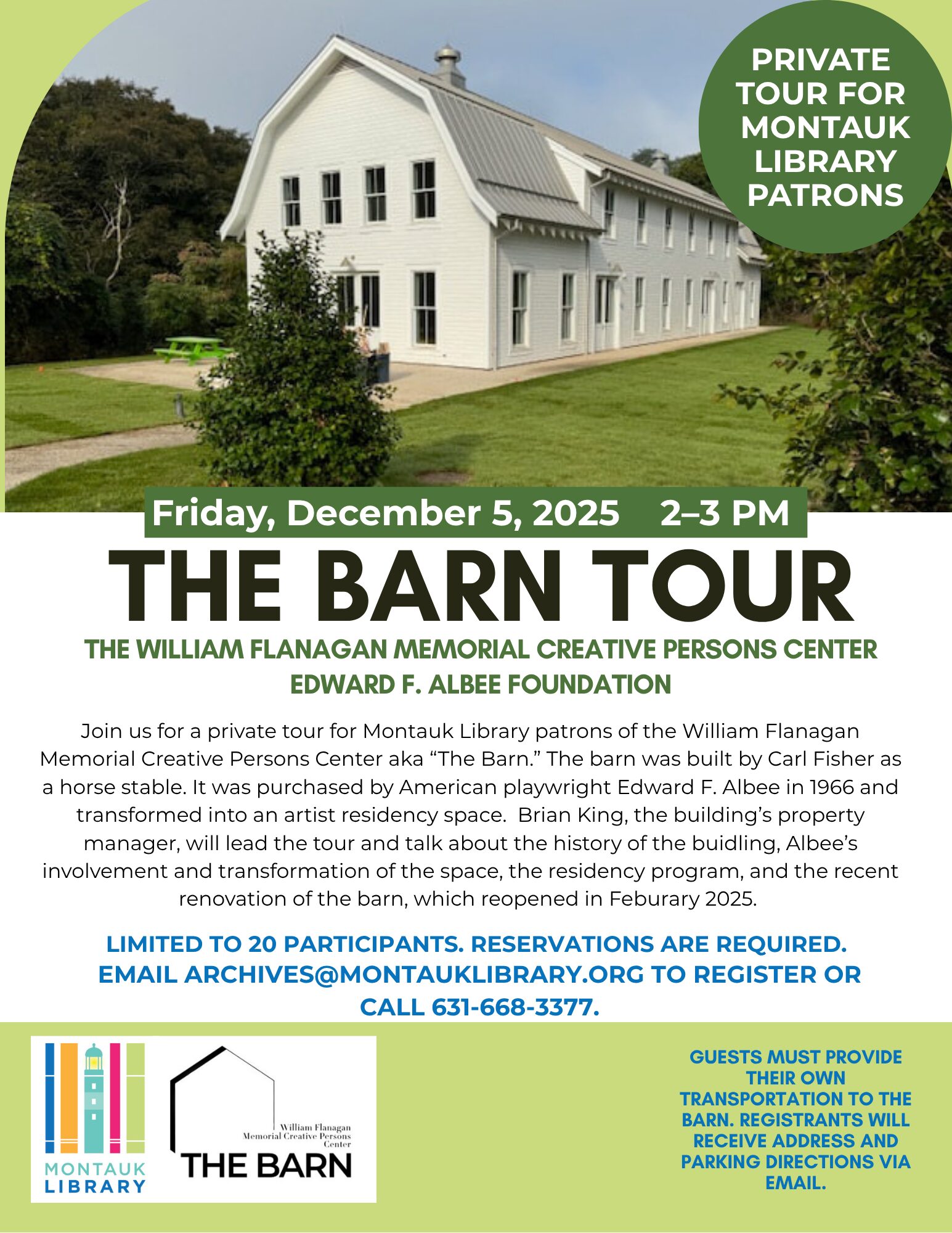
Given that its whole purpose is to provide a space free of distractions, the Barn is understandably closed most of the time to the public. A rare opportunity to take a look will be on Friday, December 5, when the Montauk Library, in collaboration with the Edward F. Albee Foundation, offers a private tour for library patrons. Registration – limited to 20 people – is required.
Reply or Comment