
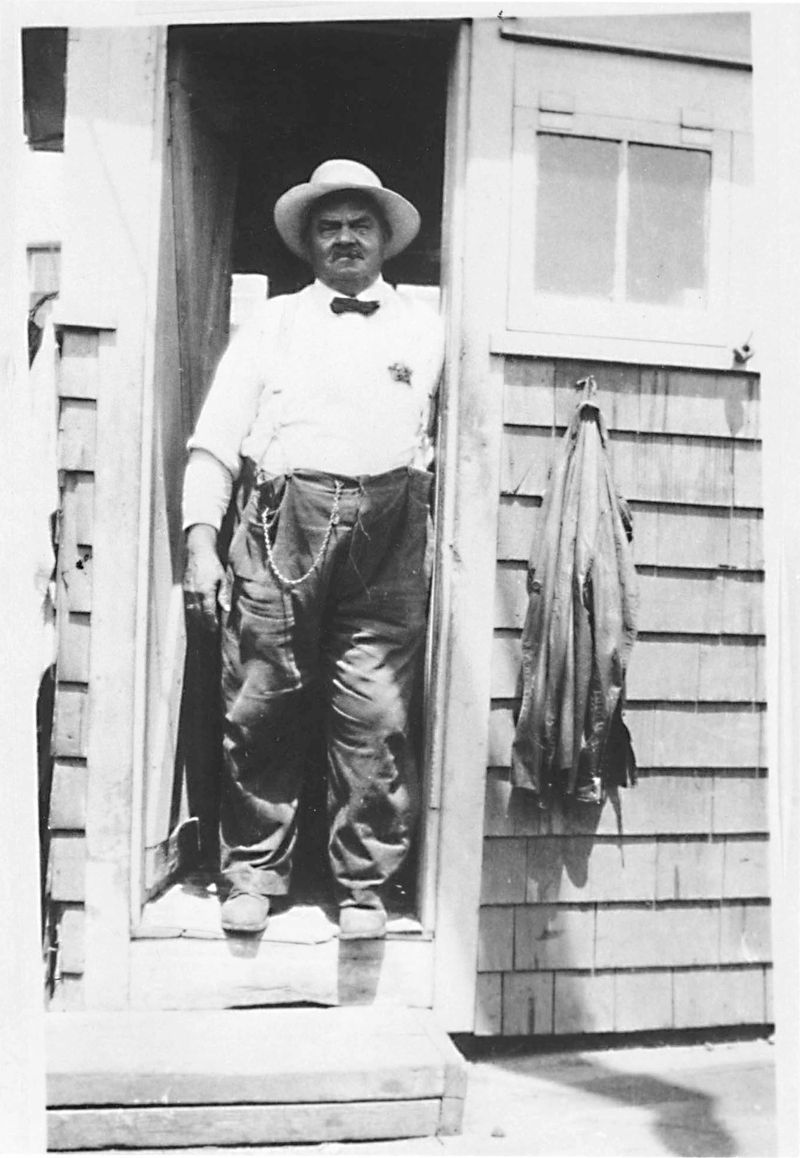
“’Cap’n Ed’ as he was affectionately known, was a man of force and a picturesque character,” Jeannette Edwards Rattray wrote about Edwin Baker Tuthill, who in 1882 built the first house in what grew into a fishing village on Fort Pond Bay.
Originally from East Marion, Captain Ed spent two summers fishing the bay before buying 42 acres on its shore and building his “fine home” there. He shipped fish caught in pound nets by train to the Fulton Fish Market and established, in addition to a wholesale fish business with a dock, a store that sold groceries, fishermen’s supplies, and other necessities.
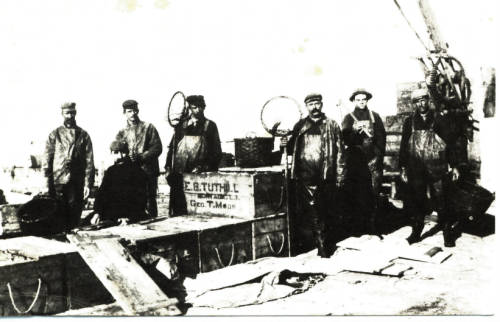
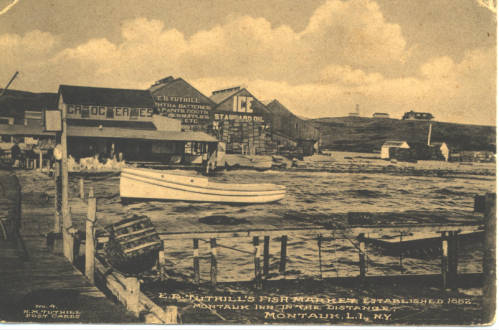
“He made plenty of money and spent it freely,” Mrs. Rattray wrote in her 1938 book Montauk: Three Centuries of Romance, Sport and Adventure. “He wore a sizable diamond on his left hand, and used it as a match-scratcher to light the big black cigar he invariably smoked.”
In an oral history interview in 1967, Sarah Tuthill recalled that Captain Ed, who was her father-in-law, hired his own special train for his son Norman to return to Montauk from the west. Similarly (or conversely), Mrs. Rattray noted that “in 1897 he wanted to go west in a hurry [so he] telegraphed the Long Island Railroad officials to that effect, and a special train was sent to carry him to his destination.”
The captain “had a good time and liked to see those around him do the same,” Mrs. Rattray wrote. “Everybody enjoyed a visit with him in his little office made from the old pilot house of the fishing steamer Ocean View, at the end of his dock.”
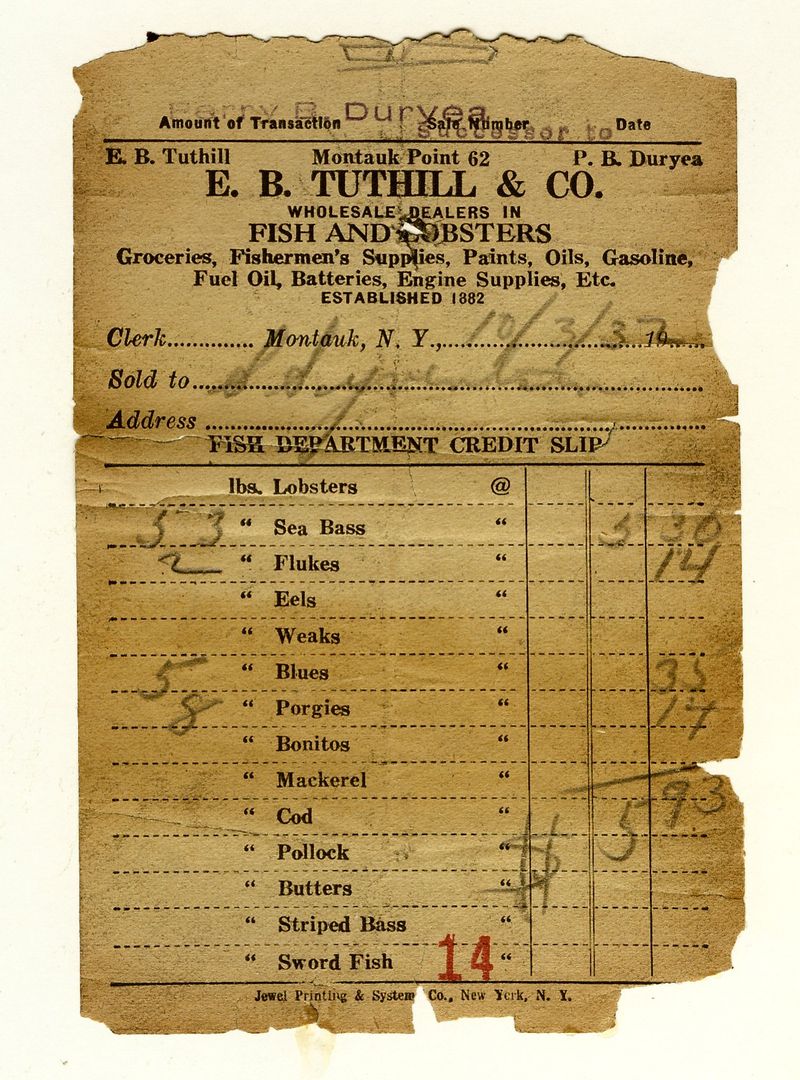
Back when fish were plentiful and diverse, Captain Ed kept records of all the different ones he caught each year, from lobsters to porgies to swordfish.
“It’s a very interesting journal,” Perry Duryea Jr. said in a 2002 oral history interview with Suzanne Gosman, “because after you leave the fish section, you then get to the section that gives the prescription of the wine he made in his basement.”
According to a story by Dan Rattiner, Captain Ed was “very disappointed” when Prohibition went into effect. “But then a friend told him how to make whiskey from beach plums. Put sugar and beach plums into a barrel with spices and water, dig a hole seven feet deep and bury it. Leave it buried a year. Then dig it up.”
“Tuthill did exactly as he was told,” the story continued. “One year later, he told some railroad workers next door if they’d like a drink then get some shovels.“
“With great enthusiasm, the men dug and dug, then as the dirt fell away from the barrel, it exploded. KA-WHAMMO. He’d forgotten to put a bung in the barrel when he’d buried it. There was nothing to drink, but lots to lick off your clothes.”
“Captain Ed was something of a one-man gang,” Perry Duryea Jr. recollected in the oral history interview. After realizing that the senior Perry Duryea was working for the competition, Jake Wells, Captain Ed offered Duryea a job with the prospect of becoming an equal partner.
That’s exactly what happened, and Captain Ed sold Duryea the business in 1931. Captain Ed retired, died in Florida in 1936, and was buried back in East Marion.
Reply or Comment